Here are many simple ways to reduce aches, improve posture, and feel better at work.
Modern office life has many benefits, but it also means that many of us spend most of our working day sitting behind a desk, staring at a computer.
By the end of the day, it’s common to experience:
- Tight shoulders
- A stiff neck
- Lower back discomfort
- Tight hips
- Aching wrists
- Tension headaches
If this sounds familiar, you’re certainly not alone.
The good news is that these aches aren’t an inevitable part of office life. While sitting for prolonged periods can contribute to discomfort, regular movement and appropriate strength training can make a significant difference.
Let’s explore why desk work affects the body and the exercises that can help.
Why Do Desk Workers Experience Aches and Pains?
The human body is designed to move.
When we remain in the same position for several hours, certain muscles become tight while others become less active.
Over time, prolonged sitting can lead to:
- Tight hip flexors
- Reduced glute activation
- Weakness through the upper back
- Tight chest muscles
- Reduced spinal movement
- Decreased circulation
- Increased muscle tension around the neck and shoulders
It’s important to remember that sitting itself isn’t necessarily the problem.
The real issue is spending too long without changing position.
Movement variety is what our bodies thrive on.
Common Problems We See in Desk Workers
Many of the people we work with spend the majority of their day sitting at a desk.
Although everyone’s experience is different, the same patterns appear regularly.
Common complaints include:
- Neck pain and stiffness
- Rounded shoulders
- Tight chest muscles
- Lower back pain
- Tight hips
- Weak glutes
- Tight hamstrings
- Wrist and forearm discomfort
- Tension headaches
These issues rarely develop overnight. Instead, they tend to build gradually as repetitive postures become part of everyday life.
The encouraging news is that they’re often highly manageable with the right combination of movement, mobility and strength training.
Making the Best of a Desk Job
For most people, avoiding sitting altogether simply isn’t realistic.
Rather than trying to eliminate sitting, the goal should be to interrupt long periods of inactivity with regular movement.
Simple strategies include:
- Standing up every 30–60 minutes
- Walking while taking phone calls
- Using the stairs whenever possible
- Refilling your water bottle regularly
- Stretching between meetings
- Changing your sitting position throughout the day
These small habits may seem insignificant, but performed consistently, they can reduce stiffness, improve circulation and help you feel more comfortable throughout the working day.
The best posture, after all, is simply your next posture.
Below are 3 lists of exercises you can do to help relieve aches and pains and feel more comfortable at work. If you are unsure of any of the exercises, you can reference YouTube.com
Exercises You Can Do at Your Desk
You don’t need access to a gym to reduce stiffness during the day.
Short mobility breaks can help maintain joint movement and relieve muscle tension before it builds up.
Useful exercises include:
- Chin tucks
- Neck rotations
- Shoulder rolls
- Thoracic rotations
- Standing hip flexor stretches
- Seated spinal rotations
- Wrist mobility exercises
- Diaphragmatic breathing
Aim to spend just 2–5 minutes moving every hour.
These brief movement breaks can improve comfort without disrupting your working day.
Exercises to Do at Home
Outside of work, adding more movement variety can help offset long periods of sitting.
Simple activities such as:
- Walking
- Yoga
- Mobility routines
- Foam rolling
- Gentle stretching
- Resistance band exercises
can all help improve mobility and reduce feelings of stiffness.
The goal isn’t to “fix” your posture.
Instead, it’s about exposing your body to a wider range of movement and helping it recover from spending much of the day in one position.
The Best Exercises to Do in the Gym
While mobility work is valuable, strength training provides the long-term foundation for moving well and feeling stronger.
Building strength improves posture, supports your joints, and increases your body’s resilience to everyday demands.
Upper Body
Strengthening the upper back helps counterbalance prolonged desk work.
Effective exercises include:
- Face Pulls
- Band Pull-Aparts
- Seated Rows
- Lat Pulldowns
These movements strengthen the muscles responsible for pulling the shoulders back and supporting healthy posture.
Lower Body
Long periods of sitting can leave the hips feeling stiff and the glutes underactive.
Exercises that help include:
- Romanian Deadlifts
- Goblet Squats
- Split Squats
- Glute Bridges
These movements strengthen the posterior chain while improving lower body function and stability.
Core
A strong core provides support for the spine and improves overall movement quality.
Excellent options include:
- Dead Bugs
- Bird Dogs
- Pallof Press
- Farmer Carries
Rather than endless sit-ups, these exercises focus on building stability and control.
Mobility
Alongside strength work, mobility exercises help maintain healthy movement through the hips and spine.
Some of our favourites include:
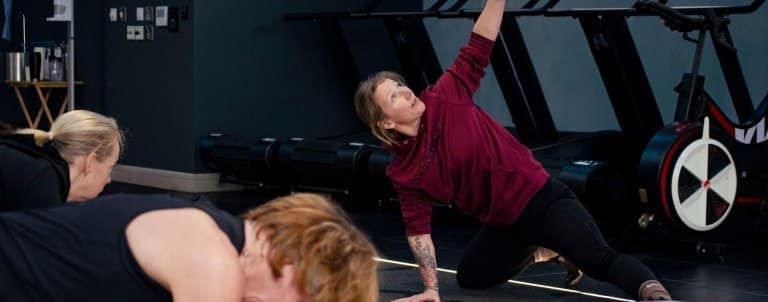
- World’s Greatest Stretch
- Hip Flexor Stretch
- Thoracic Rotations
A balanced programme that combines strength and mobility is often the most effective approach.
Why Strength Training Is the Long-Term Solution
Stretching often provides temporary relief.
Massage can feel fantastic.
But unless the muscles supporting your posture become stronger, those same aches and pains often return.
Strength training addresses the underlying issue by improving your body’s capacity to cope with the physical demands of everyday life.
Regular resistance training can help:
- Improve posture
- Build stronger muscles
- Support healthy joints
- Increase bone strength
- Improve movement confidence
- Reduce the likelihood of recurring aches and pains
Rather than simply treating symptoms, strength training helps build a body that is more resilient.
How We Support Desk Workers at Instinct
Many of our members have office-based jobs, so we understand the challenges that prolonged sitting can create.
Rather than applying the same programme to everyone, we take an individual approach.
Our coaches will:
- Assess how you move
- Identify areas of weakness or reduced mobility
- Build strength where it’s needed most
- Improve mobility alongside strength
- Adapt exercises around previous injuries or limitations
- Progress your programme gradually as your confidence grows
Because every person, every job and every body is different, your training programme should reflect your individual needs.
Key Takeaways
If you spend most of your day at a desk, remember these five simple principles:
- Move regularly throughout the day.
- Build strength as well as flexibility.
- Improve movement variety rather than chasing perfect posture.
- Don’t be afraid of resistance training—it is one of the most effective ways to build long-term resilience.
- Small habits, repeated consistently, will have a far greater impact than occasional bursts of exercise.
Desk work doesn’t have to mean living with constant aches and stiffness.
With regular movement, sensible strength training and a consistent approach, you can improve how you feel at work, recover more effectively afterwards and build a body that’s better prepared for the demands of everyday life.